Dyslexia Hub
A Practical & Accessible Dyslexia Resource
Accommodation, Modification &
Assistive Technology
"But they know how to read, they do not require the lessons to be scanned"
"I am just asking her to write a few words. Spelling tests are good for her."
"I know he can do it, he just doesn't manage his time wisely!
"Reading a comic book for a book report is out of the question, and not really fair to the other students."
"He does not pay attention in class, and is frankly a very lazy student."
"As far as I am concerned, offering him a calculator is equivalent to cheating."
"Audiobooks is not reading."
ALL REAL WORLD EXAMPLES OF EDUCATOR BIAS
WHY is accommodation SO imperative for SUCCESS
As educators we often hear things like, "curriculum is very character heavy, the cognitive load on children with dyslexia causes mental exhaustion."
OK! But what does that mean?!?!
-
According to Dr's Berninger and Richards, without modification, accommodation or assistive technology YOU are expecting the dyslexic children in your classroom to work 500% harder than their peers. Yes 500 times harder.
-
This is assuming the dyslexic child in your classroom can read and spell at grade level. Due to balanced literacy, most cannot which is why accommodation is so important. Keep in mind 7% of children with dyslexia never learn to read, and the majority have life long issues with spelling and reading comprehension (Balcr, 2017).
IMAGINE THIS... you have a child in your classroom that utilizes a wheelchair (visible disability). One day I walk into your class, remove this child's wheelchair and insist they walk to the blackboard; informing them they will be graded on their ability. Unfathomable right? I would be fired on the spot. Every time you deny a child with dyslexia (invisible disability) an accommodation, modification or other learning tool YOU ARE DOING JUST THAT.
"Accommodations are only helpful if the student knows how to use them properly" International Dyslexia Foundation

Accommodations
"Accommodations are instructional or test adaptations. They allow a student to demonstrate what he or she knows without
fundamentally changing the target skill. Accommodations do not reduce learning or performance expectations Instead, accommodations change the manner or setting in which information is presented or the manner in which students respond." International Dyslexia Foundation
Modifications
"Modifications are instructional or test adaptations that allow a student to demonstrate what he knows or can do, but
the target skill is also reduced in some way. Modifications usually lower performance expectations (e.g., lessening the complexity
of the items or the task required)."
International Dyslexia Foundation
Testimonials
"Inadequate. Unable to Learn. Stupid"
Scholastic experiences of those with dyslexia who were not accommodated.
We CAN and MUST do better.

Physicist
Albert Einstein
Albert Einstein: The renowned physicist struggled with reading and writing in his early school years, leading teachers to label him as lazy and slow. His unconventional thinking later contributed to his groundbreaking theories (Sacks, 1995).

Technologist
Bill Gates
Gates has spoken about his reading struggles in school, where he often felt overwhelmed. He learned to channel his problem-solving skills into technology, leading to the creation of Microsoft (Lerner, 2003).

Software Programmer
Kevin O'Leary
O'Leary struggled with dyslexia in school, feeling frustrated with the traditional education system. He attributes his success in business to his ability to think differently (O'Leary, 2011).

Nobel Prize in Molecular Biology
Carol Greider
The acclaimed biologist Carol Greider once thought she was stupid because reading and spelling were so difficult for her. She recalls struggling throughout elementary school. Continuing to struggle with standardized tests that negated many academic opportunities. She credits her success to outside the box thinking, creativity, and persistence.
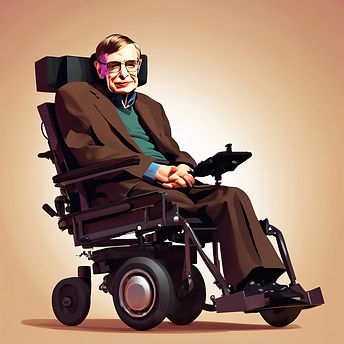
Physicist
Stephen Hawking
Hawking struggled with written communication in school and faced skepticism from teachers regarding his intelligence. His determination to overcome these challenges led to groundbreaking contributions to physics (Hawking, 2002).

Actress & Activist
Whoopi Goldberg
Whoopi cites that she was thought of as "incredibly slow" and "delayed" in elementary school. Her disability stopped her from succeeding in school. but she says that her ability "to think differently" has led to her success. That her mothers support was incredibly impactful. Her mother's motto, "You're not slow, you're just different".

Music Writer, Producer and Singer
John Lennon
The legendary musician struggled with dyslexia, affecting his school performance, as teachers often called him lazy and unable to learn. Despite this, his unique songwriting style has left a lasting legacy (Blazek, 2011).

Inventor & Entrepeneur
Henry Ford
The founder of Ford Motor Company felt that one learnt better by doing and struggled with traditional schooling that was heavily based in literacy and memorization, he often felt misunderstood. His innovative spirit led him to revolutionize the automobile industry (Rosen, 2005).

Pro Athlete and Businessman
Earvin "Magic" Johnson
Johnson struggled with reading and writing during school. According to him, his life at school wasn’t a smooth ride. “The looks, the stares, the giggles…I wanted to show everybody that I could do better and also that I could read,”. He said he could feel the low expectations his educators had of him, but credits his hard work ethic for his success in sports and business.

Entrepeneur
Walt Disney
Disney faced challenges with reading and was even expelled from school at a young age, as his teachers felt he was unable to learn. His imaginative vision allowed him to create a global entertainment empire (Blazek, 2011).

Actor
Keanu Reeves
The actor has openly discussed his struggles with dyslexia in school, where he often felt out of place. Despite these challenges, he has built a successful career (Sacks, 1995).

Singer and Song Writer
David Bowie
The iconic musician had dyslexia, which affected his educational experience. He often felt isolated, but his unique creativity shone through in his music (Blazek, 2011).

Actor
Tom Cruise
The actor struggled with dyslexia in school, facing ridicule from peers and teachers. His determination to succeed in acting helped him overcome these obstacles (Blazek, 2011).

Entrepreneur and Inventor
Steve Jobs
The co-founder of Apple faced challenges with reading and was known for his non-traditional thinking. he struggled in school and has been quoted saying that his mother was his biggest champion refusing to let his dyexia stop him from attending university. His innovative mindset revolutionized technology and design (Lerner, 2003).

Entrepreneur
Ingvar Kamprad
Kamprad struggled with school, and was accused of being a lazy student. In 1943, he founded IKEA which is still a huge success to this day.

Engineer
Bill Hewlett
His high school years were not academically noteworthy, and Hewlett recalls feeling "dumb" compared to his peers. His intellectual curiosity, and his incessant “tinkering” as he called it was driven by his desire to understand how things worked which eventually led to the co founding of the Hewlett-Packard company.

Media Mogul
Arianna Huffington
The media mogul has dyslexia, which made her educational journey challenging. She talks openly about her struggle to "keep up" in school, and having to qork She emphasizes how her unique perspective contributed to her success (Huffington, 2014).

Inventor
Thomas Edison
Edison faced significant challenges in school, often being told he was "too stupid to learn." His mother believed in him and homeschooled him, allowing his creativity to flourish (Lerner, 2003).

Artist
Leonardo da Vinci
Believed to have had dyslexia, da Vinci struggled with reading and writing, driving him to express his ideas visually through art and invention (Rosen, 2005).

Writer
Agatha Christie
The best-selling author faced reading challenges throughout her education and was often discouraged by her teachers. Despite this, her vivid imagination allowed her to create captivating plots (Blazek, 2011).

Author
Anne Rice
Rice struggled with reading throughout school, she was often punishing for not paying attention, or not trying hard enough.

Entrepreneur
Richard Branson
As a child, Branson struggled in school due to dyslexia and often felt like an outsider. He credits his entrepreneurial success to thinking differently and pursuing opportunities outside the classroom (Branson, 2009).

Actress
Keira Knightly
Keira Knightly was diagnosed at the age of 6 with dyslexia. She recalls feeling stupid compared to her peers, and struggling with literacy throughout school. She credits her supportive parents for her self esteem, which was badly affected by the education system.

Journalist
Anderson Cooper
Anderson recalls feeling inadequate at school. Having trouble staying focused, completing work, and staying on top of classroom assignments. To this day he states that most schools are not meeting the needs of dyslexic students, and credits his success to outside intervention by dyslexic specialist and advocates.

Comedian, Author, Activist
Marcia Brissett-Bailey
Marcia is an inspirational speaker, co-author and passionate advocate and champion for dyslexia and neurodiversity. She often speaks about how she felt overlooked and ignored in school, because of her struggles with the curriculum.

Chef, Author, Entrepreneur
Jamie Oliver
In grade school, Oliver was placed in special needs classrooms for five years because he struggled in his classes, and educators felt he was incapable of learning at grade level. Jamie talks about being given no extra help in school and being left feeling stupid, inferior and less than his peers. He created is own way of reading and writing that worked for him, but did not fit into the traditional classrooms idea of intelligence.